Korea's US$2.3bn Gambling Ring Arrests in the UAE: What Operation Halak Shows
Three Korean suspects in a KRW 3.1tn illegal gambling case were arrested in the UAE. What Korea says happened, the UAE's role and what is still unknown.
Last updated: 17 October 2026
On 14 October 2026, South Korea announced that three alleged leaders of an illegal online gambling network had been arrested in the UAE in a joint operation with UAE authorities, codenamed "Halak". Korean officials put the combined value of the gambling sites involved at KRW 3.1 trillion, about US$2.3 billion. Two of the suspects were flown back to Korea the same day. The alleged ringleader was still awaiting return when Seoul made its announcement, and as of 17 October we had found no report that he had been sent back. For anyone who still thinks of the UAE as a quiet place to run offshore betting from, this was the second such case in four months.
Key takeaways
- Korea's cross-government Transnational Crime Special Response Task Force says it arrested an alleged ringleader, his deputy and a software developer in the UAE, working with UAE authorities.
- Korean officials value the sites linked to the three at KRW 3.1 trillion (about US$2.3 billion). That includes KRW 2.6 trillion attributed to the ringleader and deputy.
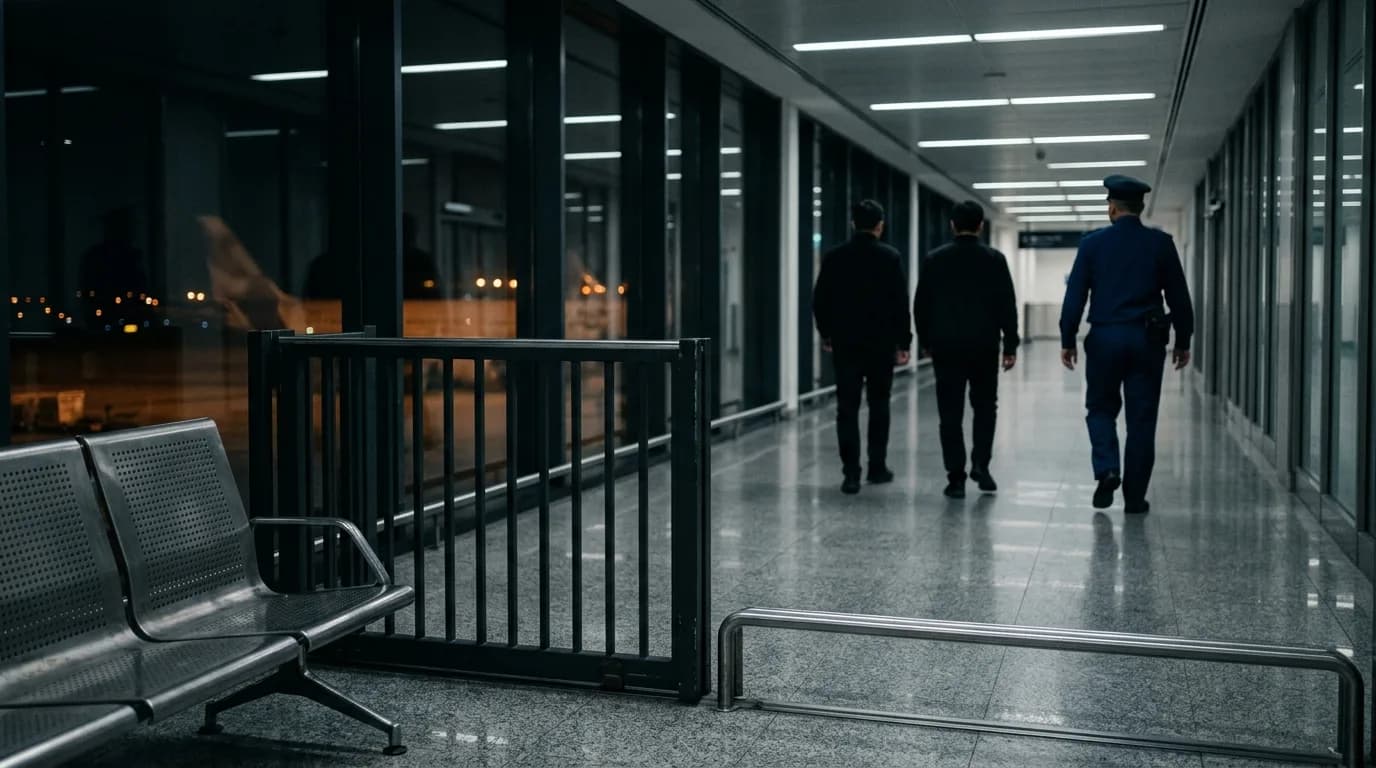
- The deputy and the developer were repatriated through Incheon International Airport on 14 October. The alleged ringleader was due to follow once procedures with the UAE were completed; as of 17 October, no return had been reported.
- President Lee Jae Myung publicly thanked UAE President Sheikh Mohamed bin Zayed Al Nahyan. He described the UAE's help as cooperation "once again, following its assistance in July".
- Every detail comes from Korean authorities and Korean media. We found no statement from the UAE government or from the GCGRA.
What happened in the UAE?
According to the Korean task force's release, which was carried in full by Korean outlets on 14 and 15 October, police and the National Intelligence Service traced three suspects to the UAE. The release identifies them only by role: A, the head of the operation; B, his deputy; and C, a developer. Korean investigators shared what they had found with UAE authorities, and the two sides then ran a joint arrest operation inside the UAE.
The task force named the operation "HALAK", which it translates from Arabic as "ruin" or "destruction". Korean coverage quotes the government as saying the name reflects how gambling leads to the ruin of families.
Korean police have not published the suspects' names, and neither do we. All three are suspects. None has been convicted.
What are the suspects accused of?
The allegations come from the Korean government and police. As Kyunghyang Shinmun, Korea JoongAng Daily and the task force's release describe them:
- The ringleader and deputy (A and B) allegedly ran illegal gambling sites worth KRW 2.6 trillion, operated from countries including the Philippines and Malaysia, and laundered the proceeds. They are said to have left Korea in 2016, after which they used passports from a third country to hide their identities and moved between hiding places, latterly in the UAE.
- The developer (C) allegedly built and ran the software for a separate site estimated at around KRW 500 billion. Korean outlets say that site's own boss was arrested in the UAE in July.
- Recruiting minors. The release says the networks drew middle school students into their operations. Korea JoongAng Daily says the KRW 500 billion ring linked to C recruited more than 10 teenagers.
- Advertising in football. The release says the group advertised BetEast, a sports betting site that is illegal in Korea, on overseas football kits and in stadiums in 2016. Korea JoongAng Daily names the club as Swansea City, then in the English Premier League.
- A public lifestyle. Korean coverage says A and B showed off a lavish lifestyle abroad and invited well-known Korean figures to visit them. Those people are not named, and nothing in the reports suggests they did anything wrong.
The overall figure appears in Korean reports as both KRW 3 trillion and KRW 3.1 trillion. The difference is rounding plus C's separate site. We use the task force's KRW 3.1 trillion and Korea JoongAng Daily's dollar conversion of about US$2.31 billion.
Has the alleged ringleader been sent back to Korea?
Not as far as we could find on 17 October. On 14 October the task force said the deputy and the developer had arrived at Incheon that day, and that the ringleader would be returned "soon", once procedures with the UAE side were complete. Korea JoongAng Daily described negotiations over his return as still continuing, and iGaming Business, writing on 16 October, said officials were still seeking his extradition. We found no later Korean government or media report of his return. We will update this page if Korean authorities confirm it.
What did the UAE actually do?
Here the record is thin, and it comes from one side. Korean sources describe a "joint arrest operation with UAE authorities" (UAE 당국과 합동 검거 작전, in Kyunghyang's wording) and "international cooperation" with the UAE. The July repatriation was described in similar terms. Korea Herald reported that those suspects were "arrested in the UAE in cooperation with UAE authorities" and flown home on a UAE carrier.
We could not find a statement from WAM, the UAE Ministry of Interior or the GCGRA on either case. So this article does not say which UAE agency made the arrests or what legal procedure applies to the ringleader's return. The Korean sources don't say either.
The clearest public signal came from the top. On 14 October President Lee posted in Korean and Arabic, thanking Sheikh Mohamed bin Zayed and the UAE government. Korea Herald quotes him as "deeply grateful to the UAE government for its active cooperation once again, following its assistance in July". iGaming Business quotes him as saying: "Criminals cannot escape punishment simply by hiding abroad."
Is this the first time the UAE has helped in a Korean gambling case?
No. On 4 July 2026, two other alleged leaders of Korean illegal gambling sites were arrested in the UAE and returned to Korea through Incheon. Kyunghyang reported then that the Korean government credited UAE authorities with "full support", including help arranging a quick flight home.
The size of the July case is reported differently in different places. July coverage put the two sites at KRW 4.8 trillion and KRW 500 billion, KRW 5.3 trillion combined. The October task-force release, and Korea JoongAng Daily, refer to the July case as KRW 10.8 trillion, and the release says the task force has uncovered cyber-gambling networks worth KRW 13.4 trillion since it was set up (KRW 10.8 trillion plus this case's KRW 2.6 trillion). One possible source of the larger July figure: when Daegu police sent a ringleader returned from the UAE on 4 July to prosecutors on 15 July, they described a KRW 1.3 trillion site plus about KRW 9 trillion in gambling credits sold to other sites, which with the KRW 500 billion site comes to KRW 10.8 trillion. No Korean source makes that link, so we report each figure as its source gives it.
What does this mean for anyone running unlicensed gambling from the UAE?
Halak was about sites aimed at Korean bettors, and nothing in the reports says the network took bets from people in the UAE. The UAE side of the story matters in a different way. It is the second time in four months that people Korea says used the UAE as a hiding place have been arrested there and sent home.
That fits the UAE's own rules at home. Under the federal framework, the GCGRA is the only body that can license commercial gaming. Its compliance pages say that taking part in, running or facilitating commercial gaming without its licence is illegal, and its December 2024 warning extended the risk to advertisers and payment processors that support unlicensed operators. Our guide to illegal gaming risks in the UAE covers who is exposed and how.
Two cautions. First, these were Korean cases. The UAE helped arrest and return foreign suspects, and there is no sign of a UAE prosecution or a GCGRA action. Second, one country's experience doesn't make a policy. Still, read alongside the GCGRA's warnings and its public register, the message is consistent: being in the UAE doesn't put an operation out of reach. Our anti-money laundering rules explainer covers what licensed operators must do on the financial-crime side.
How can you report an illegal gambling site in the UAE?
The GCGRA runs an online complaints form under Legislation & Compliance on gcgra.gov.ae. Its complaint categories include "Illegal activity" and "Anti-Money Laundering / Financial Crime". To check whether a gambling app or site is licensed, compare the company behind it against the GCGRA's register of licensees. Our guide to spotting unlicensed gaming offers shows how.
If you or someone close to you is struggling with gambling, stop and get help before chasing losses. Licensed UAE operators such as Play971 offer deposit limits, time-outs and self-exclusion, which our responsible gaming rules guide explains.
FAQ
Who was arrested in the UAE in the Korean gambling case? Three Korean suspects, identified by Korean police only as an alleged ringleader, his deputy and a software developer. Their names have not been published.
How much money was involved? Korean authorities put the sites linked to the three at KRW 3.1 trillion, about US$2.3 billion. Of that, KRW 2.6 trillion is attributed to the ringleader and deputy's sites in the Philippines and Malaysia.
Have all three been sent back to Korea? Two have: the deputy and the developer arrived at Incheon on 14 October 2026. The alleged ringleader was due to be returned once procedures with the UAE were completed; as of 17 October we had found no report of his return.
Did the UAE government comment on the arrests? Not that we could find. Everything public comes from Korea's task force, President Lee Jae Myung and Korean media.
What does Halak mean? The task force says it is an Arabic word for "ruin" or "destruction", chosen because gambling leads to ruin.
Is online gambling legal in the UAE? Only with a GCGRA licence. The regulator says unlicensed commercial gaming is illegal for operators, those who facilitate it and, potentially, players.
Further reading
- Illegal gaming risks in the UAE
- GCGRA's illegal gaming warning, April 2026
- How to spot unlicensed gaming offers in the UAE
- Is gambling legal in the UAE?
- Fake UAE lottery and casino apps, checked
Sources
- Kyunghyang Shinmun (Korean), "중학생까지 도박판 동원하고 호화 생활···UAE와 수사 공조, 3조원대 불법 도박 총책 검거" (14 Oct 2026): https://www.khan.co.kr/article/202610141200011/
- Kyunghyang Shinmun (English), "In joint cooperation with the UAE, ringleader behind illegal gambling worth around 3 trillion won arrested" (14 Oct 2026): https://www.khan.co.kr/en/article/202610141310037/
- Korean Social Welfare Journal (reprint of the government task-force release, Korean), "한-UAE 합동작전으로 사이버도박 총책급 검거 송환" (15 Oct 2026): https://www.ksw-news.com/news/articleView.html?idxno=3047137
- Korea JoongAng Daily, "Three Koreans arrested in UAE over $2.3 billion gambling operation that sponsored Premier League team" (14 Oct 2026): https://www.koreajoongangdaily.com/korea/three-koreans-arrested-in-uae-over-23-billion-gambling-operation-that-sponsored-premier-league-teamnbsp-nbsp/12920141
- The Korea Herald, "Lee thanks UAE president for help in arresting gambling ringleaders" (14 Oct 2026): https://www.koreaherald.com/article/10902731
- iGaming Business, "South Korea closes in on $2.3bn illegal gambling operation with UAE arrests" (16 Oct 2026): https://igamingbusiness.com/legal-compliance/legal/south-korea-closes-in-illegal-gambling-operation-uae-arrests/
- GamblingNews, "Three South Koreans Arrested in UAE for Running $2.3B Gambling Scheme" (14 Oct 2026): https://www.gamblingnews.com/news/three-south-koreans-arrested-in-uae-for-running-2-3b-gambling-scheme/
- The Korea Herald, "2 illegal gambling network operators extradited from UAE in joint gov't operation" (4 Jul 2026): https://www.koreaherald.com/article/10798012
- Kyunghyang Shinmun (Korean), "5조3000억 도박사이트 운영 총책 2명 송환…초국가범죄TF와 UAE '국제 공조'" (4 Jul 2026): https://www.khan.co.kr/article/202607041050001/
- GCGRA, Complaints Form: https://www.gcgra.gov.ae/en/legislation-compliance/complaints-form/
- GCGRA, Risks of Engaging in Illegal Gaming Activities: https://www.gcgra.gov.ae/en/legislation-compliance/compliance/risks-of-engaging-in-illegal-gaming-activities/
- GCGRA, "GCGRA Issues Warning Against Unlicensed Lottery and Gaming Operators" (9 Dec 2024): https://www.gcgra.gov.ae/en/news/press-releases/december-2024-press-release-gcgra-issues-warning-against-unlicensed-lottery-and-gaming-operators/
- Financial News (Korean), "'10년 도피·호화생활' 3조원대 도박조직 덜미…UAE서 3명 검거" (14 Oct 2026): https://www.fnnews.com/news/202610140831564485
- Kyunghyang Shinmun (Korean), "대구경찰, 1조3000억원 불법 도박사이트 운영총책 구속송치" (15 Jul 2026): https://www.khan.co.kr/article/202607151015001
More from the Compliance desk.

Gambling Contracts Are Now Enforceable in the UAE: What the 1 June 2026 Law Change Means
From 1 June 2026, the UAE's new Civil Code deleted the rule voiding gambling contracts. What it means for licensed players, operators and the law.
How to Spot Unlicensed Gaming Offers in the UAE: A Consumer Guide
A source-based consumer guide to spotting unlicensed gaming offers in the UAE, including how to verify operators through GCGRA sources, what red flags matter, and how to report suspicious activity.

UAE Prize Campaign Compliance Checklist for Brands, Retailers, and Agencies
A source-based checklist for UAE prize campaign compliance, covering GCGRA rules on fair market value, marketing purpose, lottery risk, and when brands should escalate before launch.